
How Do You Use a Rotavator?
 23 Aug 2022
How To Rotavate A Garden
What Is A Rotavator?
Rotavators are powerful pieces of gardening machinery, often used in gardens, allotments, and fields, for agriculture, landscaping, and lawn care. These machines breakup, churn, loosen, and aerate soil. The process removes weeds and prepares beds prior to planting seeds and bulbs or laying turf.
Rotavators have a set of blades attached to the front axle. The blades make contact with the earth, and as you move along, they turn, breaking though the soil. Loosening earth improves drainage, levels the area, and makes the ground perfect for growing vegetables and crops.
Choosing The Right Tiller
Tiller are available in different sizes for different applications. They are smaller models, designed specifically for use in the garden and on small allotments. Larger models, like medium duty and heavy duty cultivators, are designed for use on larger plots of land, vegetable patches and fields. These are powerful pieces of professional equipment and they are better equipped for larger jobs.

How To Use
- Check the moisture of the soil
- Remove any weeds
- Follow health and safety guidlines
- Work in strips
Check Soil Moisture
Before deciding when to use a rotavator, it is important to take the moisture in the soil into consideration, especially if the soil is compacted, or if it has never been tilled before. Although a tiller can be used on sandy soil at any time, soils high in clay behave differently when they are wet to when they are dry. When clay soil becomes dry it gets very hard. If the clay soil in your garden or allotment is too hard, using a tiller or rotavator to cultivate the land can be very difficult and the equipment may not be able to do more than scrape away at the first couple of inches of soil. If the soil is too wet, it forms clods when tilled. Those clods become like rocks when they dry, and this can ruin the soil until the next winter's weather softens them again.
If your soil is compacted or has never been tilled before, water it for several hours, three or four days before tilling. Then check to see whether the soil has drained enough to be tilled. You can do this by picking up a handful of soil from the bottom of a 6-inch deep hole and squeezing it into a ball. The ball of soil should be easy to break apart with one finger. If it dents rather than breaks, the soil is still too moist to till.
Remove Weeds
Before rotavating new ground, you should remove any weeds a few days in advance. If you rotavate through weeds, they can get caught in the machine's tines and spread around the plot of land.
Operate Safely
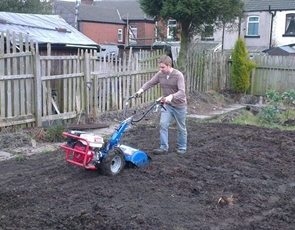
Ground tillers and rotavators can be dangerous if they are not used properly and if the correct safety precautions are not taken. It is essential that you keep your feet and hands away from the tines, and you must stay in control of the machine at all times. Safe operation requires having the correct equipment for the job and not moving along too quickly. It is also advisable to use ear defenders and padded gloves, especially if you're using a heavy duty machine over a large area.
Control Properly
Tillers and rotavators can buck and gyrate whilst working. Using physical strength to control the rotavator will make you tired quickly, and could cause muscle injury. Instead, you should stay relaxed and let the rotavator jump when it hits something hard, and then guide it back on track. This occurs mostly when tilling new ground. Pushing down on the handlebars allows you to control how big a bite the blades take.
Rotavate The Land In Strips
You should rotavate the land in strips, slightly overlapping with the previous strip as you move on to the next strip. Make two or three passes over each strip, and repeat the process at right angles to the original rotavated strips. Don't dig much deeper than two or three inches deep on the first pass. You can then set the blades to dig deeper on each pass after that.
Top Tips For The Best Results
- Work when the conditions are right. The ground is softer in the spring and autumn, and you can turn soil easier during those seasons.
- If you're concerned about weeds returning to the area, you can use a weedkiller first.
- If you're growing fruits and vegatables and have used weedkiller, it's best to wait a few weeks before planting anything.
- It can be easier to rotavate soil if you remove the turf first. Sod contains grassroots that holds a layer of soil together, making it lumpy. Grass is also likely to reroot, which you might want to avoid. You can remove strips of sod with turf cutter hire, and you can relay the grass in a nee spot, or dispose of them.
- Take care near trees because the blades can strike the roots, causing the machine to kick and stall.
- Put down a layer of manure or compost so it mixed with the soil as you turn it. This is a great tip if you're making a vegatable patch or flower bed.
- If you have large rocks, stone, and stabs embedded in the earth, you can use a mini digger hire to clear the area before preparing and rotavating the area.

Before

After